Engineering implication
Bound concurrency and propagate deadlines across workers.
// engineering radar · AI Engineering
Distributed inference serves model workloads across multiple processes or devices.
Distributed inference serves model workloads across multiple processes or devices. Scheduling, communication and resource contention become part of response reliability. Engineering choices depend on model size and workload characteristics; distribution does not automatically improve latency or efficiency.

The PagedAttention paper studies KV-cache memory management and batching in LLM serving; it does not validate the entire recovery example on this page. [1]
Efficient Memory Management for Large Language Model Serving with PagedAttentionKwon et al. · SOSP / arXiv · Paper
Google SRE explains capacity constraints, load shedding and graceful degradation when serving systems are overloaded. [2]
Handling OverloadGoogle · Site Reliability Engineering · Engineering guidance
References support the specific statements above. Definitions are paraphrased synthesis; scenarios, diagrams, implementation checks and portfolio connections are independent educational examples, not results reported by these sources.
Bound queues and enforce tenant resource limits.
An inference service propagates a request deadline across workers and cancels unnecessary work when the caller disconnects.
Unbounded concurrency, slow workers or communication bottlenecks can exhaust capacity and amplify tail latency.
Connected engineering concerns
These technologies address adjacent design constraints. Connections express conceptual relationships, not citations or measured dependencies.
Independent implementation perspectives · illustrative, not findings reported by the cited sources.
Bound concurrency and propagate deadlines across workers.
Isolate tenants and guard against resource exhaustion.
Scenario-based testing, traceable evidence and failure recovery for AI systems beyond the demo.
A plausible response can conceal incorrect reasoning, unsafe tool use or brittle recovery. These personal technical perspectives examine how representative tests and operational evidence can support release decisions without claiming unmeasured results.
Portfolio work sharing this technology’s domains. Shared subjects indicate editorial relationships, not citations.

Published on RSA Conference official library: AI-driven threats move at machine speed, so security must shift from monitoring to autonomous response. Why self-healing systems that isolate, repair and recover on their own are now essential — and how intent, time and interaction put guardrails on defensive automation.
RSA Conference

Generative AI was defined by digital creation—LLMs generating text, summarizing data, and generating code where errors can be edited. Physical AI brings artificial intelligence into the real world through sensors and robotic actuation, where actions have irreversible physical consequences and there is no 'undo' button.
Forbes Council
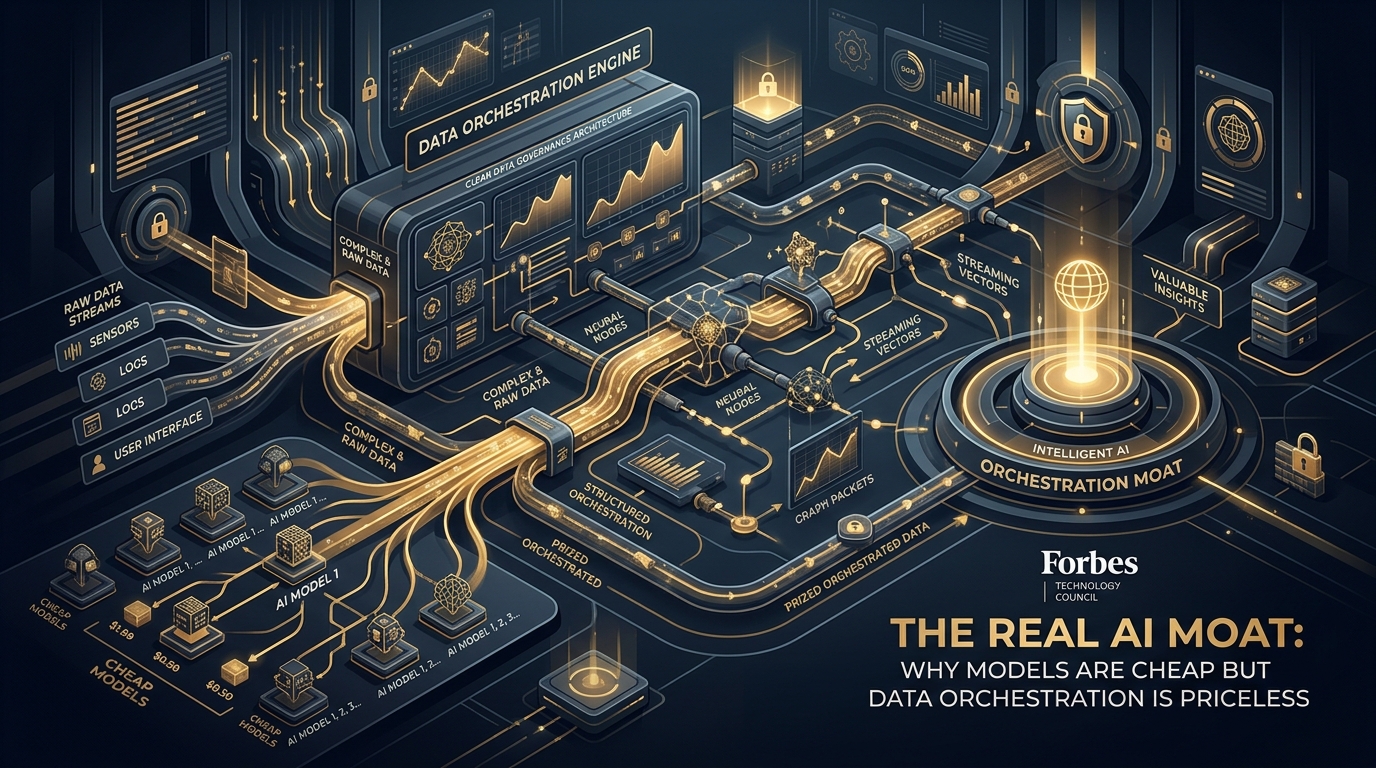
As frontier models commoditize and open-source alternatives catch up, owning raw models offers little defensibility. The true enterprise AI moat lies in continuous data orchestration, clean operational governance, domain-specific data pipelines, and high-fidelity contextual retrieval.
Forbes Council

As code generation becomes commoditized, the next generation of engineers will differentiate through systems architecture, deterministic safety guardrails, prompt unit economics, and holistic cognitive system design.
Forbes Council

Moving past vanity parameter counts to evaluate enterprise AI investments through cost-performance efficiency, token ROI, deterministic output density, and measurable business throughput.
Forbes Council

An architectural examination of the fundamental tension between contextual user personalization and enterprise zero-trust data privacy in modern retrieval and agent ecosystems.
Forbes Council