Published · December 30, 2020
Scalable Real-Time Data Pipelines for AI and Machine Learning–Driven Enterprise Systems
European Journal of Computer Science and Information Technology (EJCSIT) • Vol. 8, Issue 5, pp. 69-86 (2020)
Author listed by source: Harsh Verma
- Publisher
- European Centre for Research Training and Development UK (ECRTD)
- Research area
- Cloud & Infrastructure
- Publication date
- December 30, 2020
- Status
- Published
- DOI
- 10.37745/ejcsit.2013/vol8n56986
- Manuscript
- Not applicable
Abstract
Publisher abstractViews Downloads Citation Authors Harsh Verma Publication Date December 30, 2020 DOI https://doi.org/10.37745/ejcsit.2013/vol8n56986-1 Abstract Views 119 Downloads [sdc_count id=”” before=”” after=” Downloads”] Citation Verma H. (2020) Scalable Real-Time Data Pipelines for AI and Machine Learning–Driven Enterprise Systems, European Journal of Computer Science and Information Technology , 8 (5), 69-87 Abstract The growth of enterprise data volumes across the 2000s and 2010s pushed traditional batch-oriented data processing infrastructures past their practical limits, motivating a sustained shift toward distributed, stream-based architectures capable of supporting real-time analytics and machine learning (ML). This article synthesizes foundational and applied research published between 2001 and 2019 on distributed batch processing, distributed structured and key-value storage, early continuous query engines, in-memory cluster computing, micro-batch and internet-scale stream processing, log-based messaging, and unified batch/streaming programming models, to examine how scalable real-time data pipelines can be designed to support artificial intelligence (AI) and ML-driven enterprise systems. Ten distinct systems and thirteen primary sources are reviewed in depth. Drawing on this literature, the article proposes a five-layer architectural framework ingestion, stream processing, batch/model training, durable storage, and analytics/serving and evaluates the quantitative performance data, scalability mechanisms, fault-tolerance strategies, and enterprise implementation challenges reported across these sources. Reported figures include Google’s documented execution of roughly 100,000 MapReduce jobs per day, processing more than twenty petabytes of data daily; Amazon’s Dynamo latency service objective of sub-300-millisecond response at the 99.9th percentile; the 0.5-to-2-second target latency of the D-Streams micro-batch model; and the adoption of Storm by more than sixty production organizations by 2014. The review concludes that horizontally scalable, log-based messaging, combined with fault-tolerant, in-memory and micro-batch computation and durable, replicated storage, constituted the technical foundation that made real-time, ML-driven enterprise analytics feasible within this period, and that this layered architecture continues to underpin modern enterprise AI infrastructure
Full abstract reproduced from the publisher record. Original record ↗
Citation
Verma, H. (2020). Scalable Real-Time Data Pipelines for AI and Machine Learning–Driven Enterprise Systems. European Journal of Computer Science and Information Technology (EJCSIT) • Vol. 8, Issue 5, pp. 69-86 (2020). https://doi.org/10.37745/ejcsit.2013/vol8n56986
Subject relationships
Inside the research.
An editorial topic map from this paper’s portfolio tags, not a diagram reproduced from the paper.
Part of the Connected Knowledge Graph
77 related works · 9 content types
Connected research & perspectives
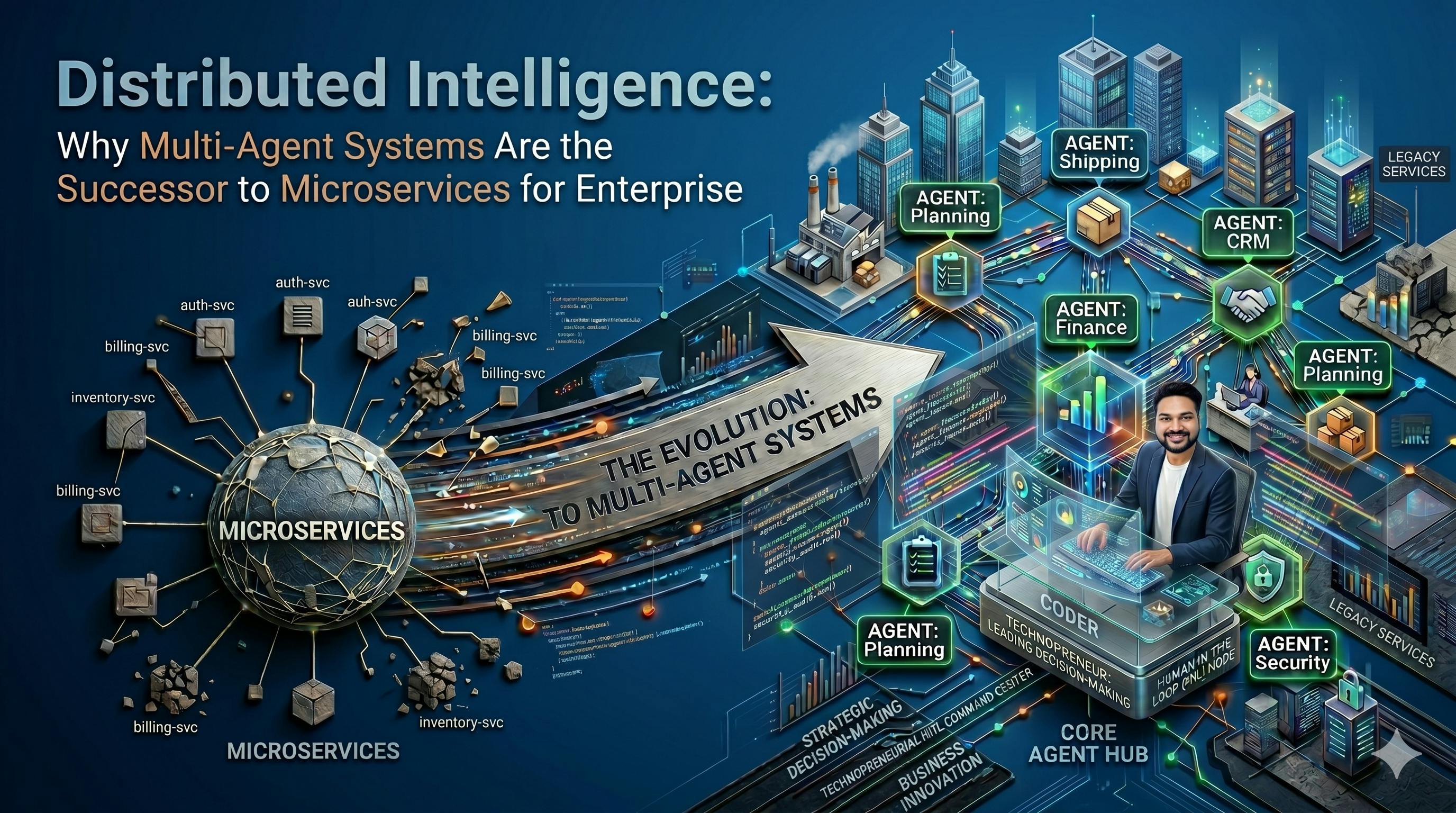
Distributed Intelligence: Why Multi-Agent Systems Are the Successor to Microservices
Just as microservices decomposed monolithic codebases, autonomous multi-agent networks are decomposing complex reasoning workflows into distributed, collaborative nodes.
HackerNoon

Distributed AI Systems
Resilient data pipelines, shared state and scalable infrastructure for enterprise intelligence.
Personal technical perspective

A Custom Java Hash Table
A source-based review of separate chaining, map operations and the correctness lessons in a public educational implementation.
Public source review

TrueML Talks #35: Big Data and ML Practices at Palo Alto Networks
Production machine learning engineering patterns, distributed feature pipelines, model-serving at scale, latency and prompt injection defenses, and automated deployment architectures at Palo Alto Networks.
TrueML Talks #35

Google Developer Experts: Official Global GDE Directory Listing
Empowering engineers globally through verified expertise in cloud scalability, AI pipelines, and distributed architectures.
Google Developers
Secure Real Time Heterogeneous Data Management Tool
Published · Presents a novel architecture addressing the complexity of ingesting, validating, and managing real-time streaming data from heterogeneous IoT devices in parallel. Formulates a secure, low-latency edge-computing ingestion pipeline capable of sub-millisecond dispatch and tamper-evident stream verification.
IEEE Xplore