Published · 2026
Cloud-Based AI Systems for Scalable and Intelligent Software Applications
World Journal of Advanced Research and Reviews (WJARR) • Vol. 29, No. 1 (2026)
Author listed by source: Harsh Verma
- Publisher
- WJARR
- Research area
- Cloud & Infrastructure
- Publication date
- 2026
- Status
- Published
- DOI
- 10.30574/wjarr.2026.29.1.0077
- Manuscript
- Not applicable
Abstract
Publisher abstractThe speed of cloud computing and artificial intelligence, which have transformed the way software applications are designed and deployed. The cloud-based AI systems provide a scalable, adaptable, and cost-efficient solution to build intelligent systems capable of processing large amounts of data and running complicated computations in real-time. The paper is intended to address the design, deployment, and performance of cloud-based AI systems, especially scalability, system intelligence, and efficiency. It talks about the architecture, implementation, and integration of machine learning algorithms in the cloud. The effectiveness of cloud-based AI systems, in this study, was determined using a mixed-method approach, which included the analysis of system design, experimentation, and performance benchmarking. these systems significantly provide the scaling effect due to the dynamically allocated resources, enhance system intelligence due to the learning algorithms, and lessen infrastructure and operating expenses due to the services-based business models. Moreover, user experiences and faster decisions can be achieved with the assistance of real-time processing. The study paper also indicates the challenges, such as latency problems in distributed computing systems, data privacy and security, and resource allocation, in addition to the advantages. the need to use robust system architecture and better management techniques.
Full abstract reproduced from the publisher record. Original record ↗
Citation
Verma, H. (2026). Cloud-Based AI Systems for Scalable and Intelligent Software Applications. World Journal of Advanced Research and Reviews (WJARR) • Vol. 29, No. 1 (2026). https://doi.org/10.30574/wjarr.2026.29.1.0077
Subject relationships
Inside the research.
An editorial topic map from this paper’s portfolio tags, not a diagram reproduced from the paper.
Part of the Connected Knowledge Graph
77 related works · 9 content types
Connected research & perspectives
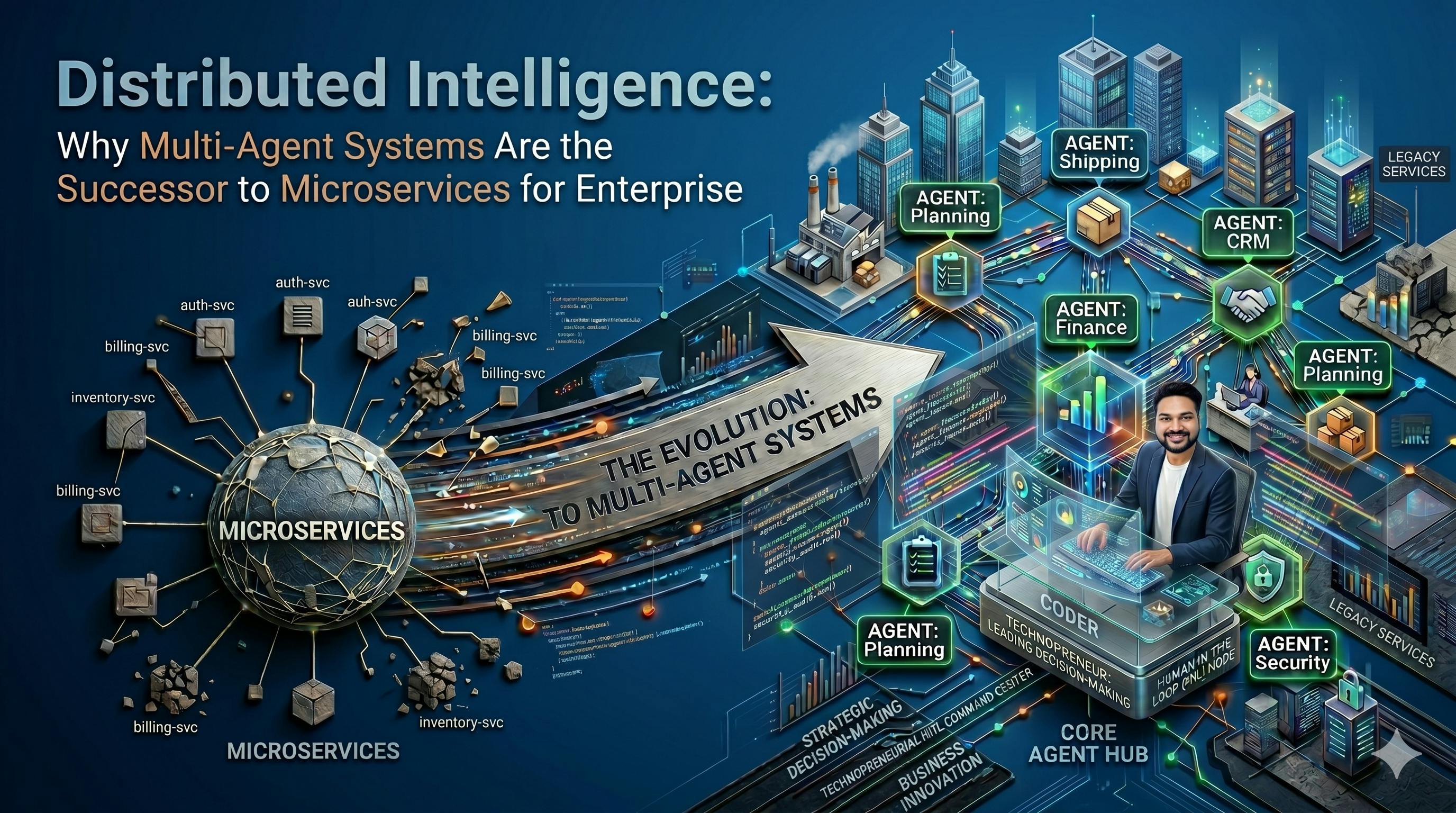
Distributed Intelligence: Why Multi-Agent Systems Are the Successor to Microservices
Just as microservices decomposed monolithic codebases, autonomous multi-agent networks are decomposing complex reasoning workflows into distributed, collaborative nodes.
HackerNoon

Distributed AI Systems
Resilient data pipelines, shared state and scalable infrastructure for enterprise intelligence.
Personal technical perspective

A Custom Java Hash Table
A source-based review of separate chaining, map operations and the correctness lessons in a public educational implementation.
Public source review

TrueML Talks #35: Big Data and ML Practices at Palo Alto Networks
Production machine learning engineering patterns, distributed feature pipelines, model-serving at scale, latency and prompt injection defenses, and automated deployment architectures at Palo Alto Networks.
TrueML Talks #35

Google Developer Experts: Official Global GDE Directory Listing
Empowering engineers globally through verified expertise in cloud scalability, AI pipelines, and distributed architectures.
Google Developers
Secure Real Time Heterogeneous Data Management Tool
Published · Presents a novel architecture addressing the complexity of ingesting, validating, and managing real-time streaming data from heterogeneous IoT devices in parallel. Formulates a secure, low-latency edge-computing ingestion pipeline capable of sub-millisecond dispatch and tamper-evident stream verification.
IEEE Xplore