Published · 2024
AI-Powered Anomaly Detection in Cloud-Based Applications
International Journal of Scientific Research and Management (IJSRM) • Vol. 12, No. 1 (2024)
Author listed by source: Harsh Verma
- Publisher
- IJSRM
- Research area
- Cloud & Infrastructure
- Publication date
- 2024
- Status
- Published
- DOI
- 10.18535/ijsrm/v12i01.ec07
- Manuscript
- Not applicable
Abstract
Publisher abstractThe rapid adoption of cloud-based architectures has increased system scalability and flexibility while simultaneously expanding the attack surface and operational complexity of modern applications. Traditional rule-based monitoring systems, which depend on static thresholds and predefined signatures, struggle to detect sophisticated threats and performance irregularities in highly dynamic, elastic, and ephemeral cloud environments where workloads scale up and down continuously and services are frequently redeployed. This paper explores the design and implementation of AI-powered anomaly detection frameworks tailored for cloud-native infrastructures, examining the theoretical foundations, architectural components, and practical deployment considerations of intelligent monitoring systems. By leveraging machine learning techniques such as supervised learning, unsupervised clustering, and deep learning models including recurrent neural networks and autoencoders, artificial intelligence systems can identify deviations from baseline behavior across distributed services, containers, and microservices in real time. The proposed approach integrates telemetry data from logs, metrics, and network traces to establish adaptive behavioral profiles, emphasizing automated feature extraction, continuous model training, and feedback loops that reduce false positives while improving detection accuracy. The framework is explicitly designed to operate across the full lifecycle of anomaly management, from raw data ingestion through model inference to alert generation and remediation. Additionally, this study addresses scalability challenges, data privacy considerations, and integration with DevOps and SecOps workflows. Experimental evaluation, conducted on a dataset exceeding 500,000 records drawn from logs, metrics, and network traffic, demonstrates improved detection rates, faster incident response times, and enhanced system resilience compared to conventional monitoring tools. Five model families were benchmarked side by side, with hybrid ensemble approaches achieving the strongest overall results. The findings suggest that AI-powered anomaly detection significantly strengthens observability and security in cloud-based applications, enabling proactive threat mitigation and operational optimization in increasingly complex distributed environments.
Full abstract reproduced from the publisher record. Original record ↗
Citation
Verma, H. (2024). AI-Powered Anomaly Detection in Cloud-Based Applications. International Journal of Scientific Research and Management (IJSRM) • Vol. 12, No. 1 (2024). https://doi.org/10.18535/ijsrm/v12i01.ec07
Subject relationships
Inside the research.
An editorial topic map from this paper’s portfolio tags, not a diagram reproduced from the paper.
Part of the Connected Knowledge Graph
77 related works · 9 content types
Connected research & perspectives
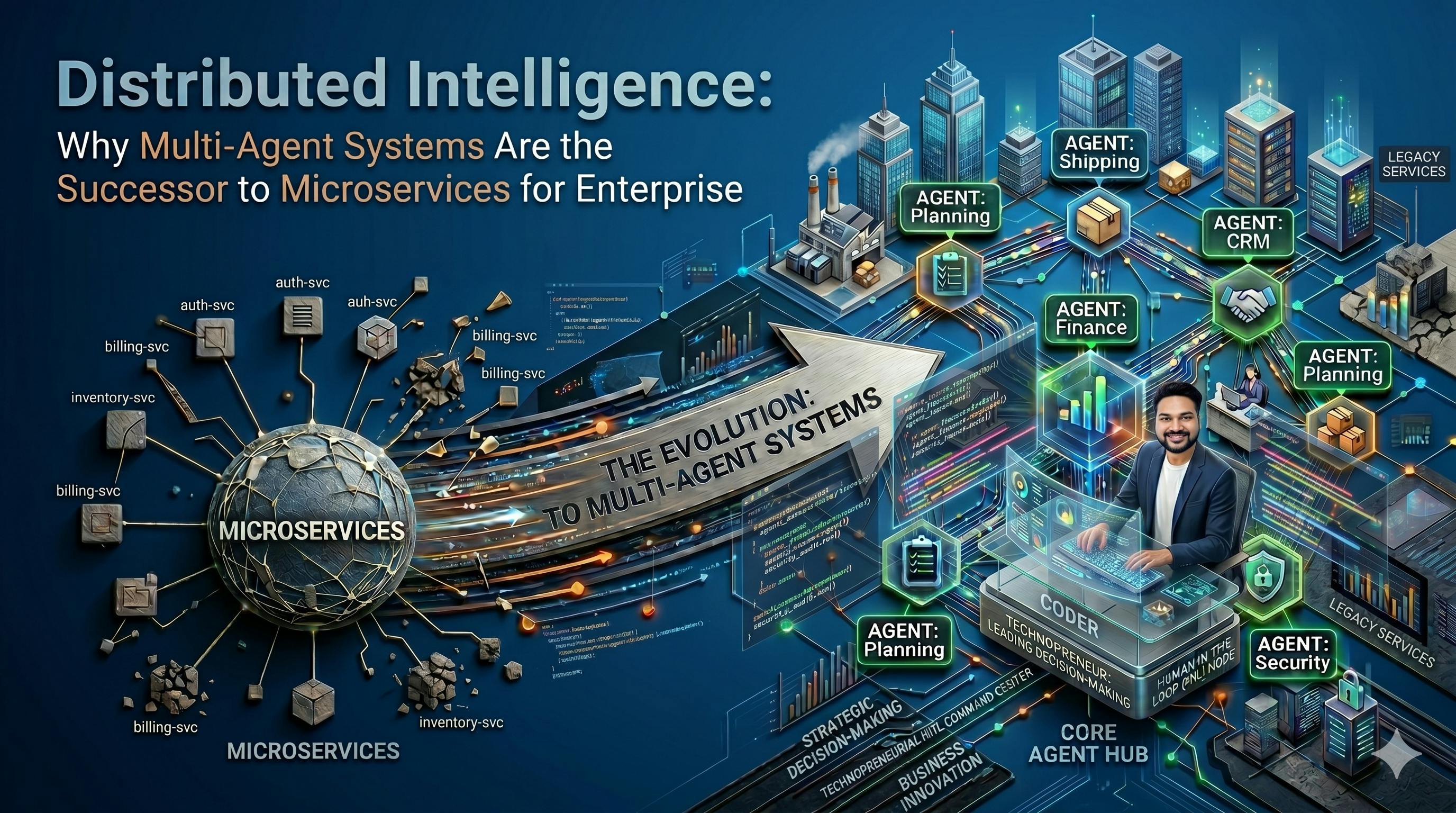
Distributed Intelligence: Why Multi-Agent Systems Are the Successor to Microservices
Just as microservices decomposed monolithic codebases, autonomous multi-agent networks are decomposing complex reasoning workflows into distributed, collaborative nodes.
HackerNoon

Distributed AI Systems
Resilient data pipelines, shared state and scalable infrastructure for enterprise intelligence.
Personal technical perspective

A Custom Java Hash Table
A source-based review of separate chaining, map operations and the correctness lessons in a public educational implementation.
Public source review

TrueML Talks #35: Big Data and ML Practices at Palo Alto Networks
Production machine learning engineering patterns, distributed feature pipelines, model-serving at scale, latency and prompt injection defenses, and automated deployment architectures at Palo Alto Networks.
TrueML Talks #35

Google Developer Experts: Official Global GDE Directory Listing
Empowering engineers globally through verified expertise in cloud scalability, AI pipelines, and distributed architectures.
Google Developers
Secure Real Time Heterogeneous Data Management Tool
Published · Presents a novel architecture addressing the complexity of ingesting, validating, and managing real-time streaming data from heterogeneous IoT devices in parallel. Formulates a secure, low-latency edge-computing ingestion pipeline capable of sub-millisecond dispatch and tamper-evident stream verification.
IEEE Xplore