Agentic AI · iamharshverma.com · August 14, 2026 · 8 min read
Build with Gemini, Sunnyvale: Leading Track 3 for App Builders
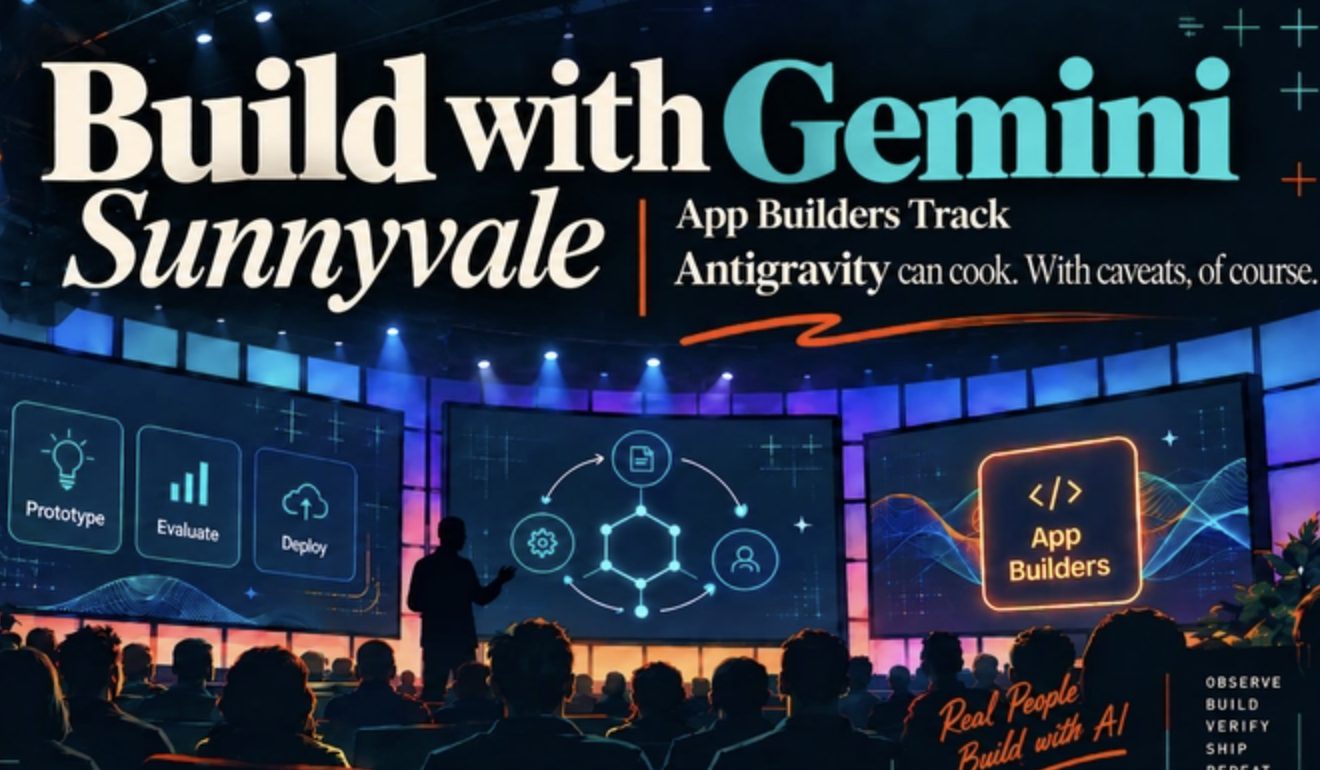
Track Lead and TA notes from Build with Gemini in Sunnyvale: how App Builders skipped the boilerplate, orchestrated agents in plain language and shipped a live app from scratch in one hands-on, code-first lab.
Thursday, August 13, Sunnyvale. Lights down, screens up, and one promise on the agenda: skip the boilerplate and get straight to building. I served as a Track Lead and TA for Track 3, App Builders, the hands-on, code-first track for software developers at Build with Gemini.
The theme was Building Applications with Agent-First Workflows. The tagline we kept repeating in the room: Antigravity can cook. With caveats, of course. Our loop for the day was simple: observe, build, verify, ship, repeat.
Your build: what we built with Gemini, and the problem it solves
Every developer knows the first hours of a project are rarely about the idea. They go to setting up the workspace, wiring dependencies, writing requirements nobody reads and scaffolding code that looks the same every time.
In Track 3, participants used AI developer tools to set up their workspace automatically, draft project requirements and safely write application logic. Then they orchestrated their own intelligent agents with natural-language prompts to handle multi-turn conversations, and shipped a live, working application from scratch before the day ended. The problem it solves: the distance between an idea and a running app collapses from weeks to hours.
Your process: how Gemini fit into the workflow
The lab treated Gemini as a teammate across the whole lifecycle, not a code autocomplete:
As a TA: the caveats are the lesson
Walking the room, the most valuable moments were not when agents got everything right. They were when an agent confidently wrote something subtly wrong, and a developer caught it in review. That is the real skill of agent-first development: knowing when to trust, when to verify and how to give an agent better context.
I saw developers who had never built an agent ship one, and seasoned engineers rethink how much of their day is really design versus typing.
Before vs. after
Before: start from an empty folder, copy boilerplate from an old repo, write requirements after the code, and spend the first day on setup instead of the product.
After: start from intent. The agent drafts requirements and scaffolding in minutes, the developer reviews and directs, and the first working version arrives the same afternoon. The job shifts from writing every line to designing, reviewing and verifying, which is where engineering judgment matters most.
The impact
For me, as a Google Developer Expert and an engineer building AI systems every day, this track sharpened what I tell teams adopting AI coding tools:

Thank you
Thank you to the Google Cloud team and every App Builder in Sunnyvale. Real people build with AI, and watching a room full of developers ship live apps in a single day is a reminder of how fast this craft is changing.
Sources and Further Reading
Building with agentic AI?
Harsh advises founders on AI strategy, architecture and trust.
Book an advisory callEnjoyed this? Get the next one.
Occasional essays on agentic AI and security.
More on Agentic AI
Connected Research & Resources
Part of the Connected Knowledge Graph
45 related works · 8 content types
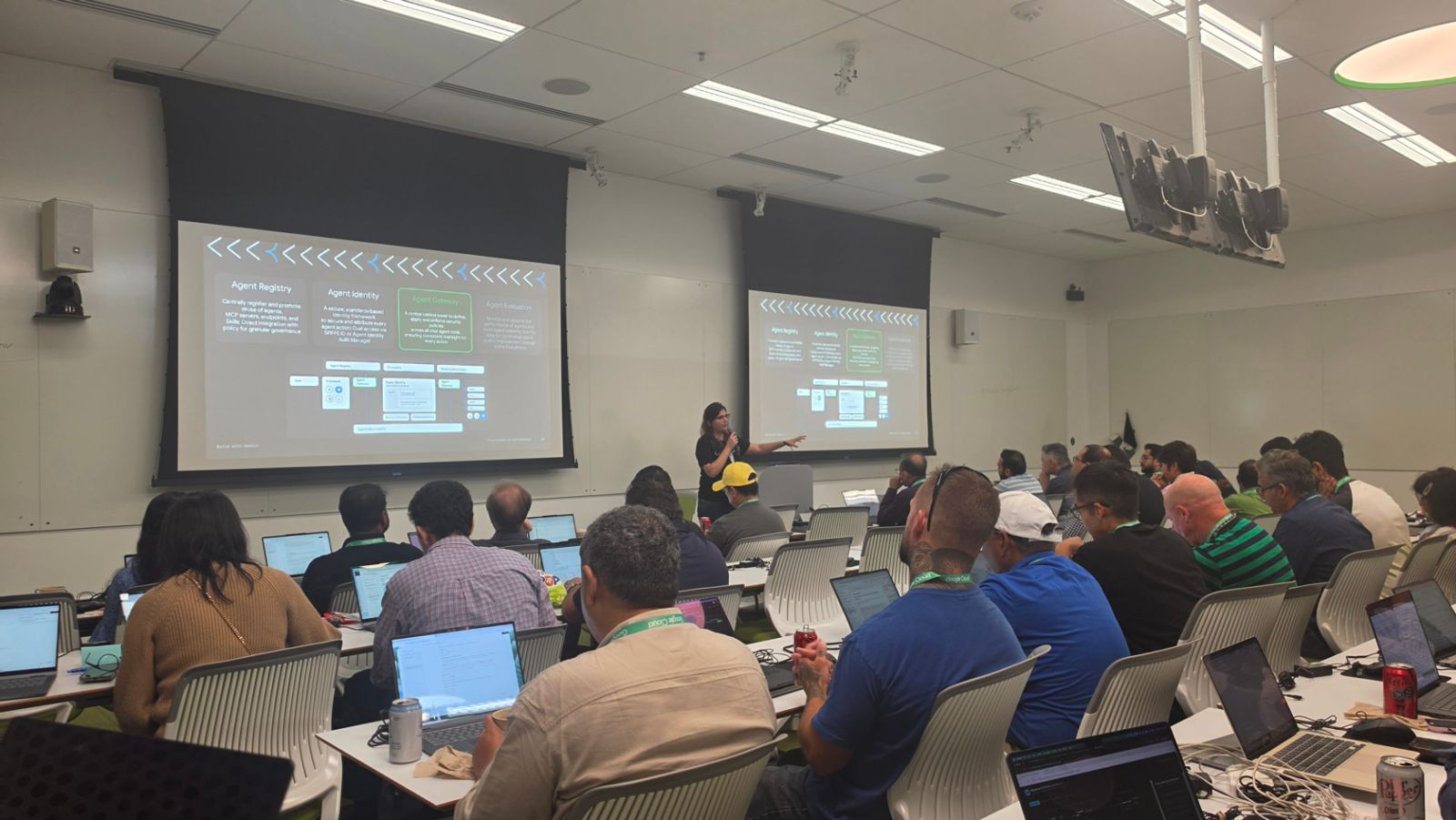
Build with Gemini, Mountain View: Leading Track 2 for Platform Builders
Track Lead and TA notes from Build with Gemini in Mountain View: what Platform Builders built with Gemini, how the lab wove it into a real governance workflow, the before-and-after for engineers, and the impact I saw in the room.
iamharshverma.com

Agentic AI Architecture
Orchestration, coordination and evaluation for systems that plan, use tools and act.
Personal technical perspective
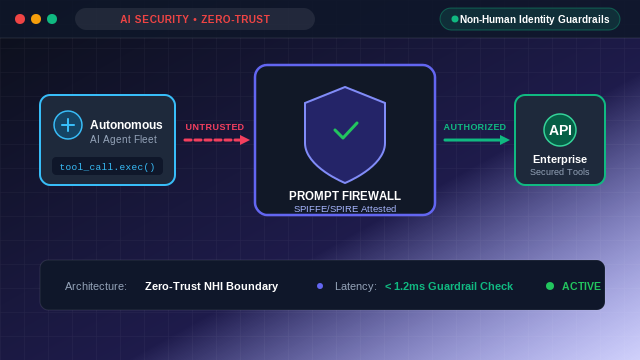
Agentic Security & NHI Guardrails
An owner-described approach to non-human identity, prompt boundaries and policy enforcement for multi-agent tool execution.
Public portfolio project