Agentic AI · iamharshverma.com · August 28, 2026 · 9 min read
Build with Gemini, Mountain View: Leading Track 2 for Platform Builders
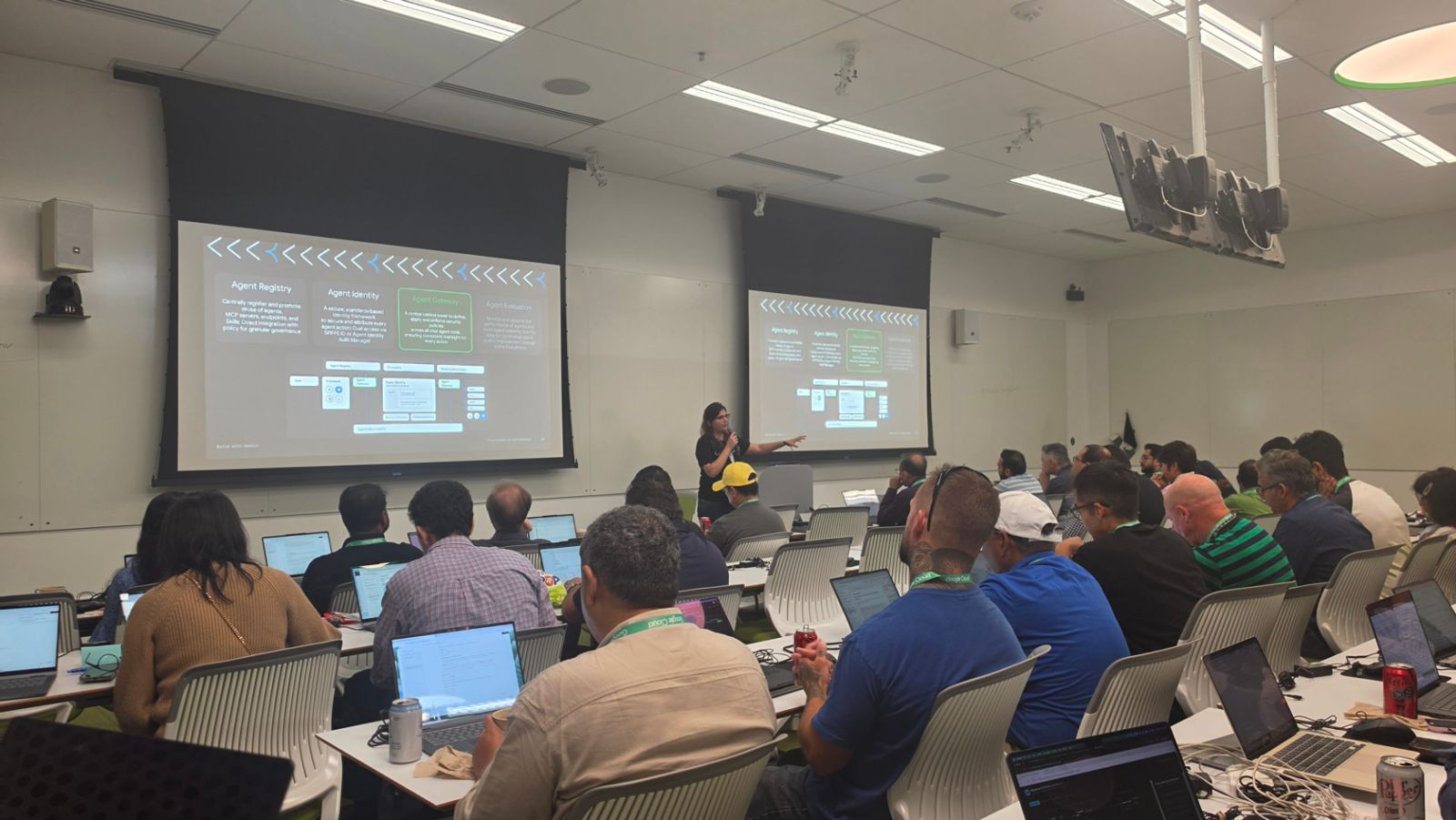
Track Lead and TA notes from Build with Gemini in Mountain View: what Platform Builders built with Gemini, how the lab wove it into a real governance workflow, the before-and-after for engineers, and the impact I saw in the room.
On Thursday, August 27, Google's Mountain View campus turned into a workshop floor for Build with Gemini. I had the privilege of serving as a Track Lead and TA for Track 2, Platform Builders: the track for engineers who don't just call a model, but have to run, secure and answer for dozens of AI agents at once.
The room was full of builders with laptops open and Google Cloud lanyards on, and one shared question on everyone's mind: once agents are everywhere in a company, who is actually in control of them?

Your build: what we built with Gemini, and the problem it solves
Track 2's mission was called Govern Your AI Estate: Your First Week as Global Head of AI. Every participant stepped into the shoes of the new head of AI at a fictional company, NovaSmart, and inherited a messy reality: agents shipped by different teams, a shadow agent nobody had registered, shared credentials, open connections to the back office and no proof any of it was safe.
Using Gemini and Google Cloud's agent platform, participants built a working control center for that estate. The problem it solves is the one I see in nearly every enterprise conversation: AI adoption moves faster than governance, and nobody can confidently answer what agents exist, what they can reach and whether they can be talked into breaking their rules.
Your process: how Gemini fit into the workflow
The lab was designed as missions, each ending with a scorecard, so Gemini worked as a teammate through a real governance loop rather than a chat window on the side:
As a TA: where people got stuck, and unstuck
Most of my day was spent table to table. The sticking points were rarely the model itself. They were the platform questions: why a least-privilege identity broke a tool call, how to read a gateway policy, why an evaluation score dropped after a harder test set. Those are exactly the moments where learning sticks, because they mirror production.
My favorite moment was watching someone 'see the fix before making it', preview a policy change, apply it, and immediately prove the rogue caller was blocked. That shift from hoping to proving is what platform engineering for AI should feel like.
Before vs. after: how the workflow changes
Before: governance was a spreadsheet and a meeting. Agent inventories lived in tribal knowledge, credentials were shared, security reviews happened after launch, and 'is it safe?' was answered with an opinion.
After: governance becomes an engineering workflow. Every agent is registered and has its own identity, connections pass through a gateway with policies you can preview, content is screened by default, and launch decisions come from evaluation scorecards instead of gut feel. Gemini speeds up each step, from reading configuration to drafting policies and summarizing what you can actually claim.
The impact: tangible benefits
For participants, the takeaway was concrete: a repeatable playbook they can bring back to their own estate on Monday. For me, leading the track reinforced how I approach AI and security work every day.

Thank you
Thank you to the Google Cloud team for building such a thoughtful, hands-on track, and to every Platform Builder who showed up curious and left with a governed AI estate. Agents are becoming infrastructure, and infrastructure deserves the same rigor we give everything else in production.
Sources and Further Reading
Building with agentic AI?
Harsh advises founders on AI strategy, architecture and trust.
Book an advisory callEnjoyed this? Get the next one.
Occasional essays on agentic AI and security.
More on Agentic AI
Connected Research & Resources
Part of the Connected Knowledge Graph
98 related works · 9 content types
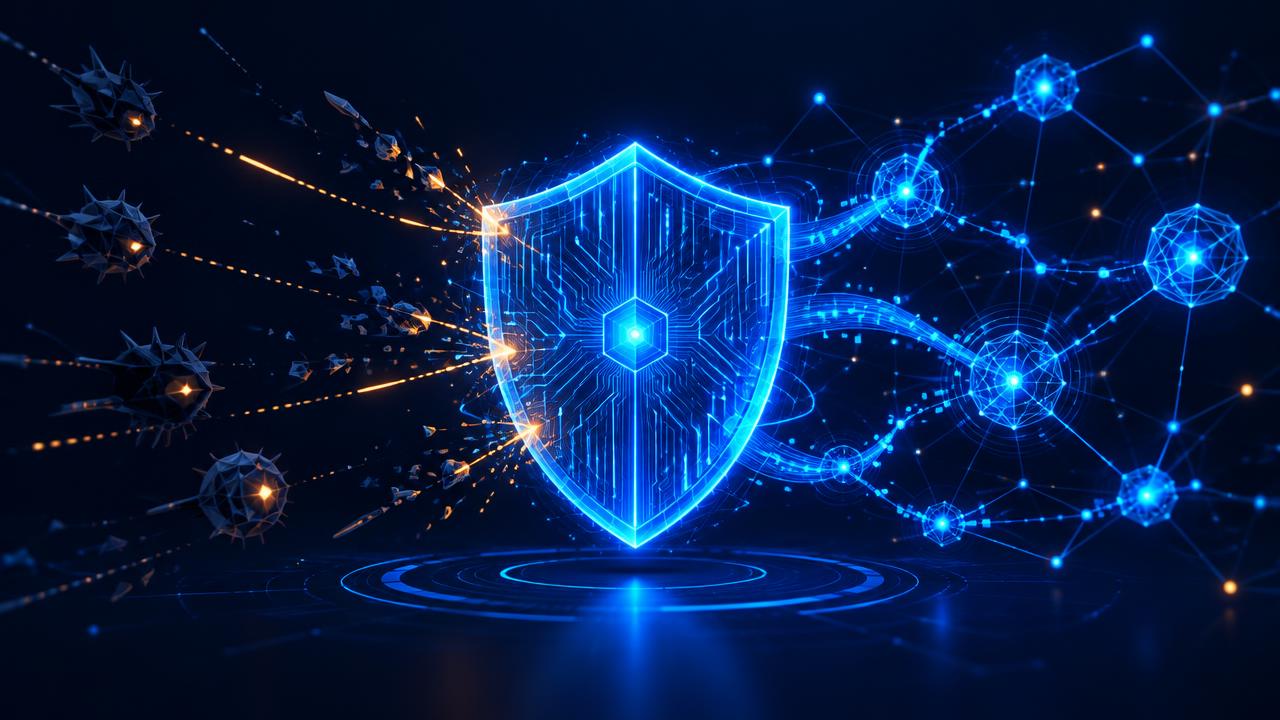
Security Without Humans: Designing Systems that Defend Themselves
Published on RSA Conference official library: AI-driven threats move at machine speed, so security must shift from monitoring to autonomous response. Why self-healing systems that isolate, repair and recover on their own are now essential — and how intent, time and interaction put guardrails on defensive automation.
RSA Conference
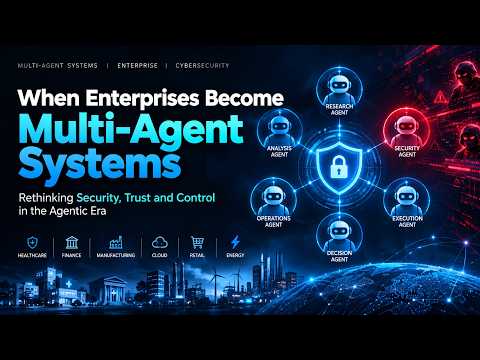
ACM Sacramento Keynote: When Enterprises Become Multi-Agent Systems
Distinguished Keynote Address titled 'When Enterprises Become Multi-Agent Systems: Secure and Trustworthy Machine Learning & AI for Multi-Domain Applications', analyzing enterprise LLM defense, zero-trust validation, and autonomous agent alignment.
ACM Distinguished Keynote Session
Xraised: Beyond the Code — The Future of AI & Cybersecurity
The next decade belongs to engineers who can bridge stochastic foundation models with deterministic enterprise guarantees.
Xraised / Spotify / Amazon Music