
Harsh

// recorded keynote · Chai and Coaching | Executive Career Masterclass

Chai & Coaching: Are Cybersecurity Degrees & Job Scope In USA Worth It?

Executive career masterclass analyzing the ROI and industry scope of cybersecurity degrees, master's programs in the USA, industry certifications, real-world skills vs academic credentials, and enterprise hiring demand.

FounderEngineerSpeaker
Chai & Coaching: Are Cybersecurity Degrees & Job Scope In USA Worth It?

Connected perspectives

Part of the Connected Knowledge Graph

48 related works · 5 content types

Explore connections
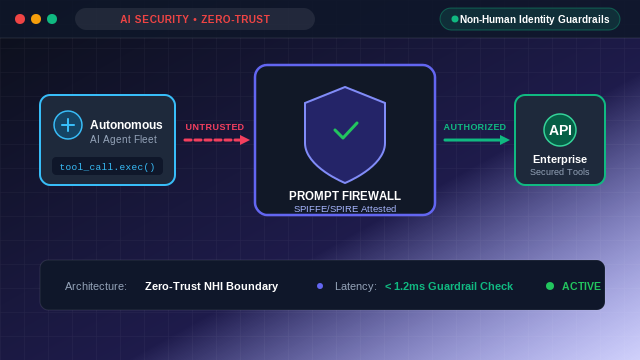
AI Security & Governance
ResearchExplore

AI Security & Governance

Identity, least privilege and runtime controls for agents operating across enterprise boundaries.

Personal technical perspective

Ethical Challenges and Bias Mitigation in Artificial Intelligence Systems
Publication · 2025Explore

Ethical Challenges and Bias Mitigation in Artificial Intelligence Systems

Published · Artificial Intelligence (AI) has rapidly become central to decision‑making in healthcare, finance, governance, and education. Yet this progress has introduced serious ethical challenges, particularly bias, fairness, transparency, and accountability. Recent empirical studies confirm that algorithmic bias remains a persistent issue. Facial recognition systems, for instance, continue to misclassify women and people of color at rates up to 30% higher than white men (Buolamwini & Gebru, 2018; Raji et al., 2024). In healthcare, diagnostic AI models trained on skewed datasets underperform for minority populations, raising concerns about equitable access to care (Chen et al., 2023). This paper provides a critical evaluation of these ethical issues and explores mitigation measures through a systematic literature review of peer‑reviewed articles, conference papers, and policy reports. Findings indicate that AI bias is primarily influenced by disparities in training data, algorithm design, and embedded social inequalities. These prejudices often lead to discriminatory outcomes that reinforce existing inequities. Other significant ethical concerns include the lack of transparency, breaches of privacy, and unclear accountability due to the “black box” nature of many AI systems. Recent developments highlight promising directions, such as explainable AI, fairness‑conscious algorithms, and regulatory frameworks like the EU AI Act (European Commission, 2024) and the NIST AI Risk Management Framework (NIST, 2023). While these initiatives represent meaningful progress, gaps remain in standardizing fairness measures and ensuring global governance. The paper concludes that future research should prioritize interdisciplinary collaboration, robust regulatory frameworks, and continuous monitoring to promote the ethical use of AI.

WJARR

Book Harsh