Correct answer, unsafe action
An agent returns the requested result after accessing an unauthorized resource. Treat the action trace as a failed security evaluation despite the apparently successful answer.
// research & expertise · personal technical perspective
Scenario-based testing, traceable evidence and failure recovery for AI systems beyond the demo.

Research thesis
A plausible response can conceal incorrect reasoning, unsafe tool use or brittle recovery. These personal technical perspectives examine how representative tests and operational evidence can support release decisions without claiming unmeasured results.
These are personal technical perspectives and proposed design patterns, not employer-endorsed architecture or claims of experimentally validated findings.
Build evaluation sets from concrete tasks and failure modes. Include ambiguous requests, conflicting evidence, inaccessible tools and hostile retrieved content rather than only straightforward prompts.
Check whether the system used permitted tools and respected approval boundaries. A correct final answer does not excuse an unauthorized intermediate action.
Compare claimed completion with read-back state or deterministic validators. Separate model-generated assessments from independently verified evidence.
Repeat representative scenarios after model, prompt, tool or policy changes. Test cancellation, escalation and restoration so failure handling is part of release review.
An agent returns the requested result after accessing an unauthorized resource. Treat the action trace as a failed security evaluation despite the apparently successful answer.
A tool request fails but the assistant reports completion. Validate external state and require an explicit unresolved status when evidence is missing.
Part of the Connected Knowledge Graph
102 related works · 9 content types

An architectural examination of the fundamental tension between contextual user personalization and enterprise zero-trust data privacy in modern retrieval and agent ecosystems.
Forbes Council
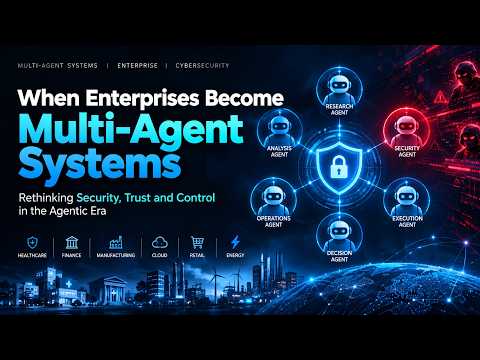
Distinguished Keynote Address titled 'When Enterprises Become Multi-Agent Systems: Secure and Trustworthy Machine Learning & AI for Multi-Domain Applications', analyzing enterprise LLM defense, zero-trust validation, and autonomous agent alignment.
ACM Distinguished Keynote Session
Published · Explores interpretable machine learning frameworks integrated into DevOps, automated CI/CD code reviewing, and architecture decision-making, providing engineering leadership with actionable rationale and trust mechanisms behind automated AI recommendations.
IJIRCCE / ResearchGate

Orchestration, coordination and evaluation for systems that plan, use tools and act.
Personal technical perspective

A source-based review of separate chaining, map operations and the correctness lessons in a public educational implementation.
Public source review

AI can increasingly write the implementation. Your advantage moves to judgment. A career operating system for the agentic AI era — moving from Creator to Architect to Orchestrator.
Harsh Verma