Published · 2026
Automated Vulnerability Patching in Legacy Code Using LLMs and Multi-AI Agents
International Journal of Scientific Research and Management (IJSRM) • Vol. 14, No. 4 (2026)
Author listed by source: Harsh Verma
- Publisher
- IJSRM
- Research area
- AI Agentic Systems
- Publication date
- 2026
- Status
- Published
- DOI
- 10.18535/ijsrm/v14i04.ec05
- Manuscript
- Not applicable
Abstract
Publisher abstractThis report synthesizes peer-reviewed and archival research published between 2019 and 2024 on the use of large language models and multi-agent architectures for automated vulnerability repair, with a specific focus on how these techniques apply, or fail to apply, to legacy software systems. The review traces a clear methodological progression across this five-year window: from template and heuristic program repair, through neural and transfer-learning models, to fine-tuned transformer-based repair, zero-shot and conversational prompting of general-purpose LLMs, and finally to multi-agent pipelines in which specialized agents divide the work of detecting, localizing, patching, and validating a vulnerability. Two figures accompany the discussion. The first depicts a generalized multi-agent repair pipeline synthesized from the architectures described across the reviewed literature, showing how detection, localization, patch generation, and validation agents typically interact, including the validation feedback loop that distinguishes conversational and agentic systems from earlier single-shot approaches. The second traces the field's methodological evolution chronologically, from 2019's template-based baselines through 2024's agentic systems. A comparative table consolidates fifteen of the most relevant studies discussed in the body of the report, listing the approach, target language, and publication venue for each. The report concludes that while multi-agent LLM pipelines show real promise for legacy code specifically, since their capacity for autonomous context reconstruction and iterative, feedback-driven refinement directly addresses the sparse documentation and thin test coverage that define legacy environments, the literature to date has been validated almost exclusively on actively maintained, comparatively well-organized open-source repositories. The gap between these benchmarks and the scale and disorganization of real enterprise legacy systems has not yet been closed empirically, and closing it, together with building trust and explainability mechanisms suitable for security-critical maintenance work, is identified as the field's most consequential open problem.
Full abstract reproduced from the publisher record. Original record ↗
Citation
Verma, H. (2026). Automated Vulnerability Patching in Legacy Code Using LLMs and Multi-AI Agents. International Journal of Scientific Research and Management (IJSRM) • Vol. 14, No. 4 (2026). https://doi.org/10.18535/ijsrm/v14i04.ec05
Subject relationships
Inside the research.
An editorial topic map from this paper’s portfolio tags, not a diagram reproduced from the paper.
Part of the Connected Knowledge Graph
100 related works · 9 content types
Connected research & perspectives
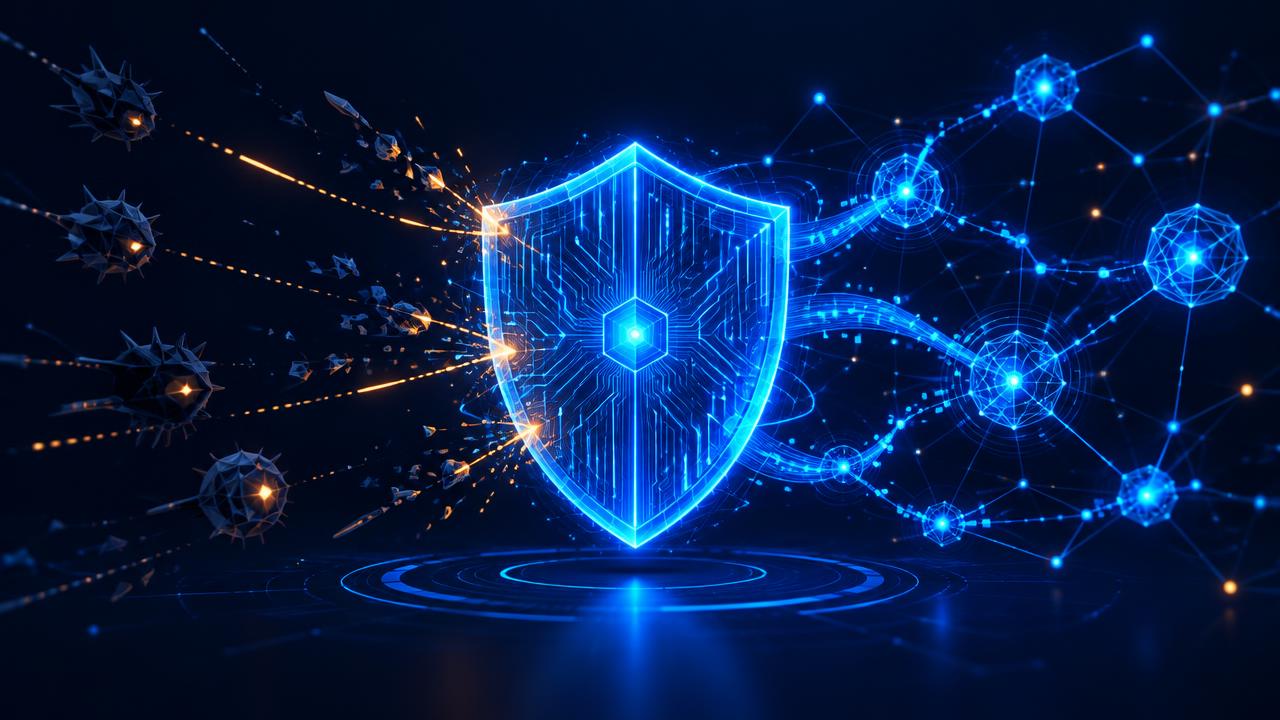
Security Without Humans: Designing Systems that Defend Themselves
Published on RSA Conference official library: AI-driven threats move at machine speed, so security must shift from monitoring to autonomous response. Why self-healing systems that isolate, repair and recover on their own are now essential — and how intent, time and interaction put guardrails on defensive automation.
RSA Conference
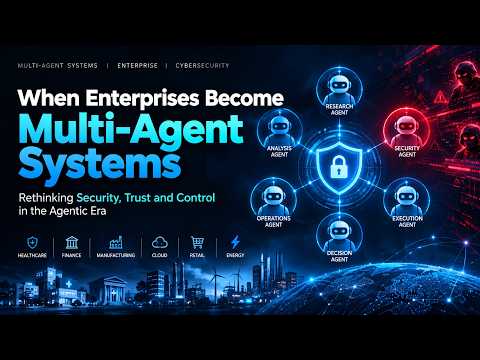
ACM Sacramento Keynote: When Enterprises Become Multi-Agent Systems
Distinguished Keynote Address titled 'When Enterprises Become Multi-Agent Systems: Secure and Trustworthy Machine Learning & AI for Multi-Domain Applications', analyzing enterprise LLM defense, zero-trust validation, and autonomous agent alignment.
ACM Distinguished Keynote Session

Business Insider: Principal Software Engineer Harsh Verma Named a 2026 NVTC Cyber50 Executive Honoree
Recognized among the National Capital Region's premier cybersecurity leaders advancing enterprise AI defense, autonomous agent security, and next-generation cyber resilience.
Business Insider / Markets Insider
Designing Self-Healing AI Agentic Systems: A Framework for Autonomous Detection and Response
Published · Develops closed-loop supervisory controller architectures allowing agent swarms to monitor runtime drift, self-quarantine compromised agents, and synthesize remediation routines dynamically.
IJSRM

Agentic AI Architecture
Orchestration, coordination and evaluation for systems that plan, use tools and act.
Personal technical perspective

Beyond AI Engineering
AI can increasingly write the implementation. Your advantage moves to judgment. A career operating system for the agentic AI era — moving from Creator to Architect to Orchestrator.
Harsh Verma