Published · 2025
Agentic Workflows for End-to-End Software Engineering Automation
World Journal of Advanced Research and Reviews (WJARR) • Vol. 25, No. 3 (2025)
Author listed by source: Harsh Verma
- Publisher
- WJARR
- Research area
- AI Agentic Systems
- Publication date
- 2025
- Status
- Published
- DOI
- 10.30574/wjarr.2025.25.3.0887
- Manuscript
- Not applicable
Abstract
Publisher abstractWith the rise of large language models (LLMs) and independent AI systems, software engineering is undergoing a transformational shift. This conceptual paper theorizes agentic workflows systems, where an AI agent or agents proactively perceive, plan, act and reflect throughout the entire software development lifecycle (SDLC); its implications for end to end software engineering automation are also discussed. This paper constructs a theory for agentic SE systems viewed from four different angles: architectural configuration, reasoning capability, SDLC coverage, and evaluation validity, referring to 30 basic and contemporary papers from the past 25 years since 2000. It is then supported with quantitative evidence from benchmark studies: top agentic systems can now solve up to 43% of real-world GitHub issues on SWE-bench Lite, with 85.9% Pass@1 on Human-Eval and 55.8% less time spent on completing a developer task in controlled experiments. There are, however, significant theoretical tensions that are not resolved: autonomy and oversight, benchmark performance and validity in the real world, and the capability of the system and ethical responsibility. Finally, the paper outlines a research agenda that focuses on the specification level of agentic SE systems, on their self-verification, and on their governance.
Full abstract reproduced from the publisher record. Original record ↗
Citation
Verma, H. (2025). Agentic Workflows for End-to-End Software Engineering Automation. World Journal of Advanced Research and Reviews (WJARR) • Vol. 25, No. 3 (2025). https://doi.org/10.30574/wjarr.2025.25.3.0887
Subject relationships
Inside the research.
An editorial topic map from this paper’s portfolio tags, not a diagram reproduced from the paper.
Part of the Connected Knowledge Graph
99 related works · 9 content types
Connected research & perspectives

Security Without Humans: Designing Systems that Defend Themselves
Published on RSA Conference official library: AI-driven threats move at machine speed, so security must shift from monitoring to autonomous response. Why self-healing systems that isolate, repair and recover on their own are now essential — and how intent, time and interaction put guardrails on defensive automation.
RSA Conference

Agentic AI Architecture
Orchestration, coordination and evaluation for systems that plan, use tools and act.
Personal technical perspective
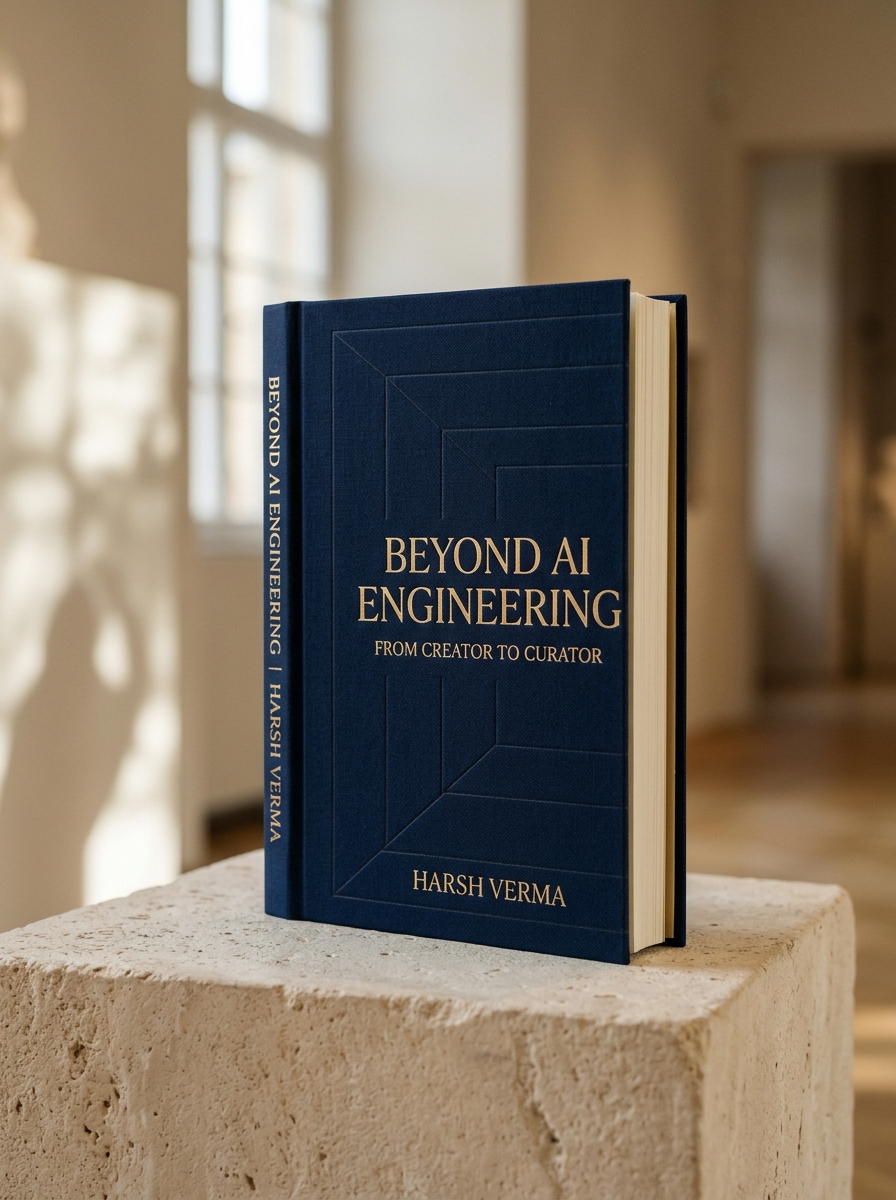
Beyond AI Engineering
AI can increasingly write the implementation. Your advantage moves to judgment. A career operating system for the agentic AI era — moving from Creator to Architect to Orchestrator.
Harsh Verma
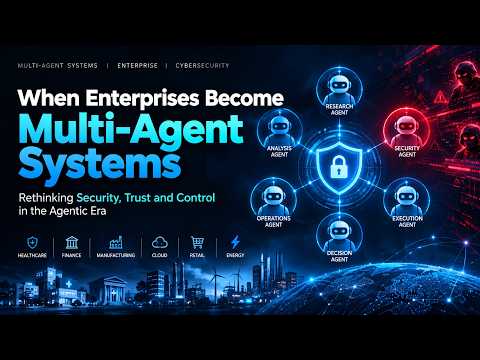
ACM Sacramento Keynote: When Enterprises Become Multi-Agent Systems
Distinguished Keynote Address titled 'When Enterprises Become Multi-Agent Systems: Secure and Trustworthy Machine Learning & AI for Multi-Domain Applications', analyzing enterprise LLM defense, zero-trust validation, and autonomous agent alignment.
ACM Distinguished Keynote Session

Business Insider: Principal Software Engineer Harsh Verma Named a 2026 NVTC Cyber50 Executive Honoree
Recognized among the National Capital Region's premier cybersecurity leaders advancing enterprise AI defense, autonomous agent security, and next-generation cyber resilience.
Business Insider / Markets Insider

Agentic AI, Enterprise Copilot Systems & Copilot Navigation
Foundational IP in autonomous agent orchestration and copilot reasoning loops. 4 pending · Assignee: Palo Alto Networks
4 pending · Assignee: Palo Alto Networks